In depth: profile
Nikola Spasić
The merchant whose handwritten will still guards his buildings on Knez Mihailova.

Photo Credit
Image courtesy of © Fred Romero from Paris, France · CC BY 2.0 via Wikimedia CommonsNikola Spasić was a Belgrade merchant who left his property to an endowment by a handwritten will of 1912 that forbade its sale. His house of 1889 on Knez Mihailova, designed by Konstantin A. Jovanović, his passage of 1912 and the little church of St Tryphon at Topčider cemetery are still part of the city.
A merchant on Knez Mihailova
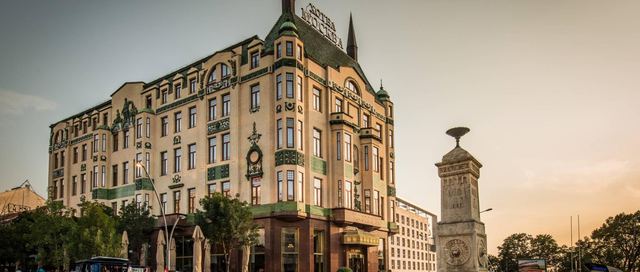
Nikola Spasić was one of the merchants who made nineteenth-century Belgrade rich. His monument is the street itself: in 1889 he built his own house at Knez Mihailova 33, to designs by the architect Konstantin A. Jovanović, with his home upstairs and shops below, the classic pattern of the merchant city.
It is now a protected cultural monument, one of the handsome façades that make Knez Mihailova feel like a street in Vienna or Budapest that has wandered south.
A will in his own hand
In 1912 he wrote his will by hand. It set up an endowment and forbade the sale of its property, so that it would stay whole for ever. The same year, the Passage of Nikola Spasić opened at Knez Mihailova 19.
The endowment still exists, more than a century later, and the city has been living with the consequences of that single handwritten page ever since. Few documents written in an afternoon have had such a long reach.
He forbade, in his own handwriting, that his property ever be sold. More than a century later, Belgrade is still reading the will.
A church in Topčider
In 1903 he built, as an endowment, the small church of St Tryphon at Topčider cemetery, in the green hills south of the centre. It is a quiet, modest building, the opposite of his busy street in the old town.

Photo Credit
Image courtesy of © Andrija12345678 · CC BY-SA 4.0 via Wikimedia CommonsOur advice: walk Knez Mihailova looking up rather than at the shop windows. Find number 33 and the passage at number 19, then, on a quiet day, take a taxi to Topčider to see his little church among the trees.
Why it's on our list
- His house on Knez Mihailova, 1889
- The Nikola Spasić passage, 1912
- The church of St Tryphon at Topčider, 1903
- An endowment by handwritten will, 1912
More in depth
 The back storySerbian CuisineĆevapi, sarma, gibanica, kajmak and proja: the dishes of Serbia and where to taste them.
 The back storyFrom the džezva to the flat white: Belgrade’s café culture, the back storyFive centuries of coffee in Belgrade: the first coffee house, the Moskva, the new roasters.
 The back storyRakija, riddles and a question mark: how Belgrade drinks, the back storyFrom the oldest kafana and Skadarlija to UNESCO-listed šljivovica and the cocktail courtyards.