In depth: profile
Milunka Savić
She went to war in her brother’s place, won the Légion d’honneur twice, then cleaned a bank.

Photo Credit
Image courtesy of © Unknown · Public domain via Wikimedia CommonsMilunka Savić went to war in 1912 in place of her brother and fought through the Balkan Wars and the First World War, winning Karađorđe’s Star with Swords twice and the French Légion d’honneur twice. After the war she worked as a cleaner at a Belgrade bank and raised four girls. Since 2013 she has lain in the Alley of the Greats at Belgrade’s New Cemetery.
In her brother’s place
Milunka Savić was born in Koprivnica, a village near Raška in central Serbia. Even her year of birth is uncertain: the records give three different dates, and her own papers do not agree, so we print none of them.
In 1912, when the First Balkan War began, her brother was called up. The story her biographers tell is that she cut her hair, put on men’s clothes and went in his place. She was found out only when she was wounded, and by then she had fought well enough that she was allowed to stay.
The Crna Reka, 1916
She fought through the Balkan Wars and the First World War, including the long, hard years on the Salonika Front. In 1916, on the Crna Reka front in Macedonia, she captured 23 Bulgarian soldiers, an episode recorded by Serbia’s Ministry of Defence. She was wounded more than once.
Serbia awarded her Karađorđe’s Star with Swords, one of its highest decorations for bravery, twice. France gave her the Légion d’honneur twice and the Croix de Guerre with the gold palm; according to the Ministry of Defence, she was the only woman to receive that distinction.
After the war
Peace was less generous than the generals. She worked as a cook, a nurse and a supervisor at a factory making army uniforms in Bosnia, and from 1929 as a cleaner at the Mortgage Bank in Belgrade. She had a daughter, Milena, and adopted three more girls, Višnja, Radmila and Zorka, raising them all on a cleaner’s wage.
Her grave carries two lines: “Sergeant of the Serbian army” and “Grateful Serbia”. It took the country a while to get to the second.
It is one of the strange pictures of interwar Belgrade: a sergeant with a drawer full of French and Serbian orders at home, sweeping the floors of a bank.

Photo Credit
Image courtesy of © Pinki · CC BY-SA 4.0 via Wikimedia CommonsThe Alley of the Greats
Milunka Savić died in Belgrade on 5 October 1973. On 10 November 2013 her remains were moved to the Alley of the Greats at Belgrade’s New Cemetery, among the writers, scientists and artists the nation most honours. The plain granite slab reads simply: “Milunka Savić, Sergeant of the Serbian army”, and below, “Grateful Serbia”.
Our advice: the New Cemetery on Ruzveltova is one of the most beautiful in Europe and a quiet walk from the city centre. Visit with respect, and ask at the gate for the Alley of the Greats.
Why it's on our list
- Born in Koprivnica, near Raška
- Took 23 prisoners on the Crna Reka front, 1916
- The Légion d’honneur, twice
- Reburied in the Alley of the Greats, 2013
More in depth
 The back storySerbian CuisineĆevapi, sarma, gibanica, kajmak and proja: the dishes of Serbia and where to taste them.
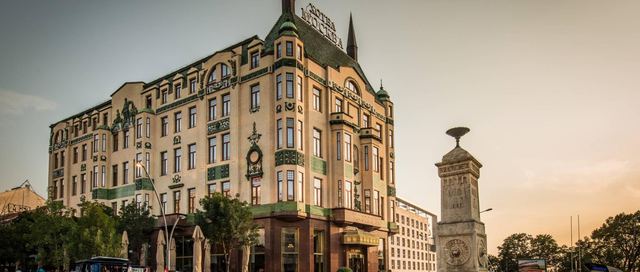 The back storyFrom the džezva to the flat white: Belgrade’s café culture, the back storyFive centuries of coffee in Belgrade: the first coffee house, the Moskva, the new roasters.
 The back storyRakija, riddles and a question mark: how Belgrade drinks, the back storyFrom the oldest kafana and Skadarlija to UNESCO-listed šljivovica and the cocktail courtyards.