In depth: profile
Katarina Ivanović
The first Serbian woman painter, and the first woman honoured by the Serbian Learned Society.

Photo Credit
Image courtesy of © Katarina Ivanović · Public domain via Wikimedia CommonsKatarina Ivanović was the first Serbian woman painter of note and, in 1876, the first woman to be made an honorary member of the Serbian Learned Society, forerunner of today’s Academy. She trained in Vienna, painted portraits, still lifes and historical scenes, and left her work to the Serbian people. Her self-portrait of 1836 hangs in the National Museum in Belgrade.
A woman with a brush
Katarina Ivanović was born in Hungary, into a Serbian family; the records disagree about the town and the year, so we print neither. She chose painting at a time when it was, in the words of the Serbian Academy, “a male occupation”, and studied in Vienna, where women were rarely admitted to formal art training.
The self-portrait of 1836
Her best-known painting is the self-portrait she made in Vienna in 1836: a young woman with dark hair, looking straight out at the viewer with a calm that seems quite modern. It is now in the National Museum of Serbia in Belgrade, and it is one of the founding images of Serbian art, a woman claiming the right to be both the painter and the subject.
Portraits, still lifes and history
She went on to paint portraits, still lifes and scenes from Serbian history, among them episodes from the uprisings that freed Belgrade. She was drawn to the newly free city out of patriotism, though she lived much of her life in Hungary.
The first woman honoured
In 1876 the Serbian Learned Society made her an honorary member: the first woman to receive the honour from the institution that became today’s Serbian Academy of Sciences and Arts. In 2026 the Academy marked the 150th anniversary of her election with a ceremonial session.
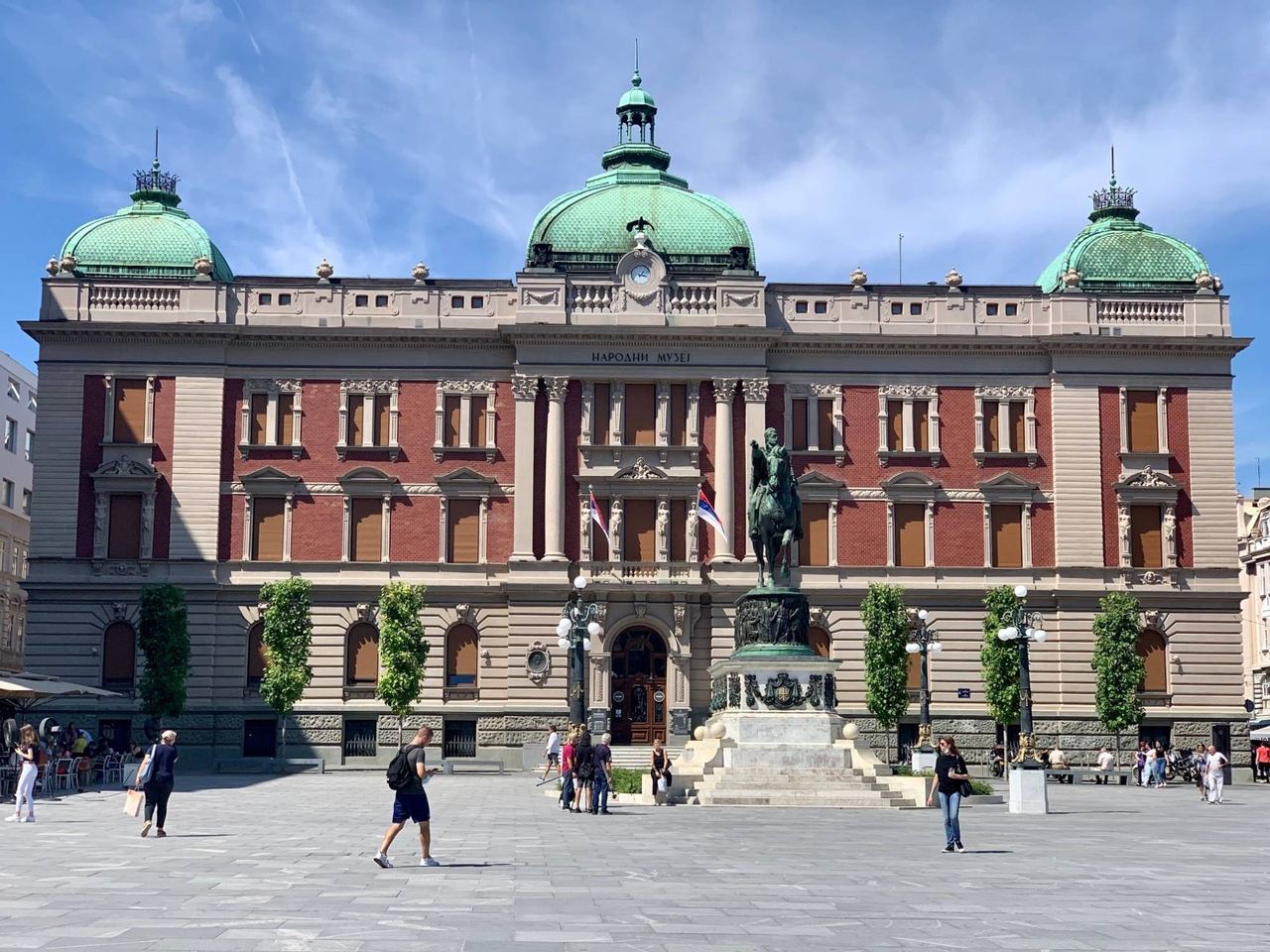
Photo Credit
Image courtesy of © ULTIMATE International MediaShe died in Székesfehérvár in 1882 and left her works to the Serbian people. They came to the National Museum in Belgrade, which still holds them.
In 1836 a young woman in Vienna looked into a mirror and painted herself as an artist. In Serbian art, nobody had done that before.
Our advice: when you visit the National Museum on Republic Square, look for her self-portrait among the nineteenth-century paintings, then compare it with the women painted by men in the same rooms.
Why it's on our list
- The first Serbian woman painter
- Self-portrait, Vienna, 1836
- Honorary member of the Serbian Learned Society, 1876
- Her work is in the National Museum of Serbia
More in depth
 The back storySerbian CuisineĆevapi, sarma, gibanica, kajmak and proja: the dishes of Serbia and where to taste them.
 The back storyFrom the džezva to the flat white: Belgrade’s café culture, the back storyFive centuries of coffee in Belgrade: the first coffee house, the Moskva, the new roasters.
 The back storyRakija, riddles and a question mark: how Belgrade drinks, the back storyFrom the oldest kafana and Skadarlija to UNESCO-listed šljivovica and the cocktail courtyards.