Property · 61 of the best in Belgrade
New Belgrade: the modernist city reborn
From marsh to business district

About New Belgrade: the modernist city reborn
Built from a marsh by young volunteers after 1948 as the showpiece capital of Yugoslavia, New Belgrade is being reborn: its modernist landmarks protected and restored, new glass towers rising beside them, and a new bus station, metro line and riverside opening up the city across the Sava.
The back story
For centuries the land across the Sava from Belgrade was a marsh, a frontier marshland facing the Ottoman fortress, on the edge of Habsburg Zemun, flooded each spring by two great rivers. The first plans to build a new city there were drawn up in 1923, and in 1938 Danish engineers began draining the swamp, but the Second World War stopped everything.
After the war, Yugoslavia decided to build a brand-new federal capital on the marsh. Ground was broken on 11 April 1948, and tens of thousands of young volunteers in youth work brigades, many from the countryside, dug, drained and raised the land with sand pumped from the Sava and the Danube. The first great building was the palace of the federal government, today the Palace of Serbia, completed in 1961.
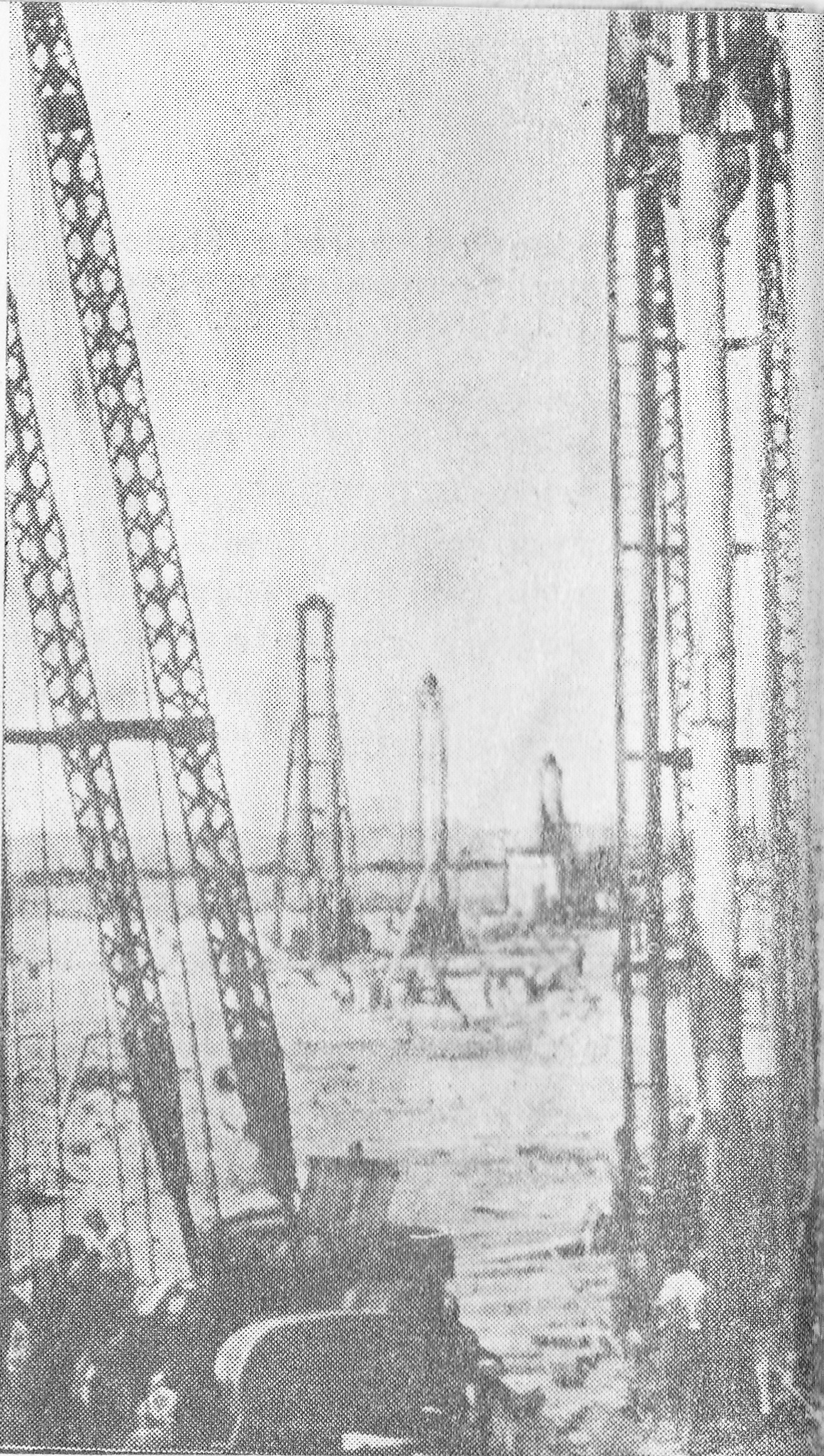
New Belgrade was built from nothing, on a marsh, by an army of young volunteers, and it is still the boldest experiment in modern city-building in this part of Europe.
The modernist city
New Belgrade was laid out as an ideal modern city: a grid of numbered blocks of housing set in green space, crossed by wide boulevards, with government buildings, offices and culture at its heart. Over the next three decades it became a showcase of Yugoslav modernism: Ušće Tower in 1964, Hotel Jugoslavija on the Danube in 1968, the vast brutalist housing of Block 23, Sava Centar in 1977, and the Western City Gate, the twin-towered Genex building, in 1980. Its population grew from fewer than 10,000 in 1948 to more than 220,000 by 1991.

The blocks
The plan took shape over fifteen years. Nikola Dobrović drew the first sketches in 1946, a general plan of 1950 divided the new city into numbered blocks, and a regulatory plan of 1962 by Uroš Martinović, Milutin Glavički, Milosav Mitić, Dušan Milenković and Leonid Lenarčić pulled the ideas together. The model was Le Corbusier’s “sun city”: tall buildings set in generous green space, with light and air for everyone. There are 72 blocks, numbered but not in order; the single-digit blocks are the oldest, and Blocks 1 and 2, designed by Branko Petričić, were finished in 1958.

Some blocks have become legends. Block 21 has the “Six Corporals” towers and the B-7 “Meander”, almost a kilometre long, built between 1960 and 1966. Block 23, financed by the army and built from 1969 to 1976 to designs by Aleksandar Stjepanović, Božidar Janković and Branislav Karadžić, was nicknamed “brutalist baroque”. Block 28 has the “Televizorka” buildings and the curving “Horseshoe”, and Block 45, the “Sun Settlement”, has 45 towers for around 18,000 people. Walk between Blocks 21, 22 and 23 to feel the scale of the Yugoslav dream at its boldest.

From housing estate to business district
After the difficult 1990s, New Belgrade found a new role. Ušće Tower, damaged in 1999, was rebuilt and reopened in 2005, and the empty plots between the blocks filled with offices, banks and hotels. Belgrade Arena opened in 2004, and between 2007 and 2009 came Delta City, the Ušće shopping centre and new business parks such as Airport City, built on the site of the old airport hangars. Today New Belgrade is the business heart of Serbia, where many international companies have their offices.
Protecting the modernist heritage
As the city changed, Belgraders began to value their modernist buildings again. In 2021 the central part of New Belgrade, Blocks 21 to 30, was protected as a cultural-historical ensemble, and Sava Centar was declared a cultural monument. Sava Centar has since been restored at a cost of more than €118 million, bringing its great halls and 1970s interiors back to life as one of the leading congress and concert venues in Southeast Europe.
The new skyline
At the same time New Belgrade is growing upwards. Ušće Tower 2, more than 100 metres high, joined its older twin in 2020, and West 65, at about 155 metres, briefly became the tallest building in Belgrade. Delta District is now rising beside Sava Centar with a 100-metre tower and the return of the InterContinental hotel, and the site of the old Hotel Jugoslavija on the Danube is being redeveloped. Belgrade’s new main bus station has opened in Block 42 beside the New Belgrade railway station, and the planned Line 2 of the metro will run through the heart of the district.
For visitors
New Belgrade is a short tram ride or a walk across the Branko Bridge from the old town. Walk along the Danube from Ušće Park past the river barges to Zemun, look up at the Genex Tower and the Palace of Serbia, catch a concert at Sava Centar or the Arena, or join one of the modernist architecture tours that have made New Belgrade a favourite with design lovers from around the world.
Why it's on our list
- Landmark modernist architecture, now protected
- The famous numbered blocks, from the Meander to Block 23
- Sava Centar restored to its 1970s glory
- New towers: West 65, Ušće Tower 2 and Delta District
- Riverside promenades on the Sava and Danube
New Belgrade through the years
From the City of Belgrade, the municipality of New Belgrade and contemporary reports.
Timeline
- 1923The first plans to build across the Sava
- 1938Work begins to drain the marshes
- 1946First urban sketches by Nikola Dobrović
- 1948Construction of New Belgrade begins on 11 April
- 1950A general plan divides the new city into blocks
- 1958Blocks 1 and 2 are finished
- 1961The federal government palace, today’s Palace of Serbia, is completed
- 1962Regulatory plan for the central zone
- 1964Ušće Tower is completed
- 1968Hotel Jugoslavija opens on the Danube
- 1969–1976Block 23 is built
- 1977Sava Centar opens
- 1980The Western City Gate, the Genex Tower, is finished
- 2004Belgrade Arena opens
- 2005Ušće Tower reopens after rebuilding
- 2007–2009Delta City, Ušće and other shopping centres open
- 2021Blocks 21–30 are protected as a cultural-historical ensemble; Sava Centar becomes a cultural monument
- 2020–2022Ušće Tower 2 and West 65 rise over the skyline
- 2025–2027Delta District and a new wave of towers
Landmarks to see · 7
Palace of Serbia, Ušće Tower and Ušće Park, Western City Gate (Genex Tower), Sava Centar, Block 23, Belgrade Arena, The Danube and Sava riverside
Blocks to see · 4
Block 21: the Six Corporals and the Meander, almost a kilometre long, Block 23: “brutalist baroque”, 1969–1976, Block 28: the Televizorka and the Horseshoe, Block 45: the Sun Settlement, 45 towers
Listings, fees and opening hours change, so please contact New Belgrade: the modernist city reborn directly before you visit.
Join the conversation
What do you think of New Belgrade: the modernist city reborn? Share your views, hopes and questions with other visitors and Belgraders.
- Loading the conversation…