NATIONAL SOCIETY · FOUNDED 1876
Red Cross of Serbia (Crveni krst Srbije)
Serbia’s Red Cross, founded in Belgrade in 1876 and at home in Simina Street since 1879.
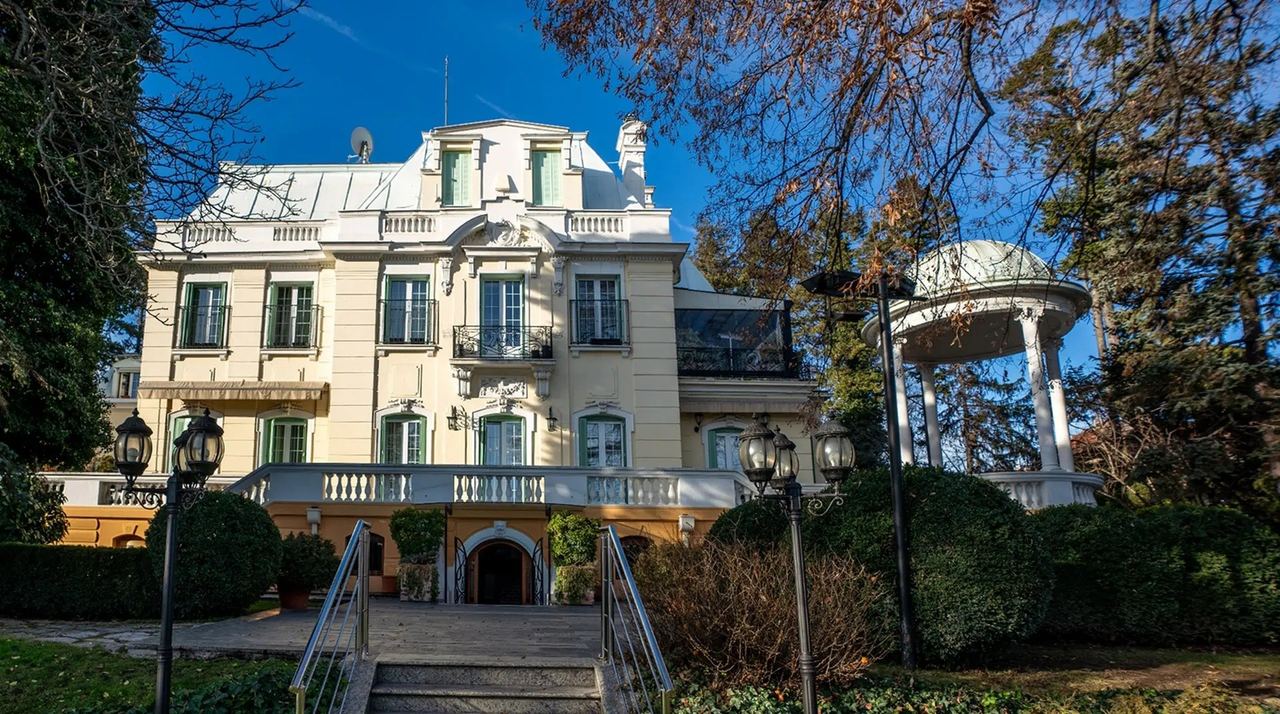
The Serbian Society of the Red Cross was founded in the hall of the Belgrade municipality on 6 February 1876, and the International Committee of the Red Cross recognised it that June. Its home in Simina Street dates from 1879, and the society works there still, with a Memorial Room on the ground floor. Today it promotes blood donation, teaches first aid, runs water rescue and responds to disasters across Serbia. The Red Cross of Serbia invites people to become volunteers and to give blood (donors should be healthy, aged 18–65 and weigh at least 50 kg), and accepts donations through its website.
A founding in the city hall
On 6 February 1876 (25 January by the old calendar), the Serbian Society of the Red Cross was founded in the hall of the Belgrade municipality, on the initiative of an esteemed military doctor. It moved quickly. That same year it founded 35 sub-committees across the country, and on 24 March, at the Society’s initiative, the Principality of Serbia adopted the Geneva conventions.
On 11 June 1876 the International Committee of the Red Cross formally recognised the Serbian Society. Its early work was hard and practical: raising money and supplies, organising hospitals, training volunteer nurses, recruiting physicians and supporting the army medical corps. By 1885 the Society had grown to 105 sub-committees, a remarkable spread for a young organisation in a small state.
Humanity across a front line
During the Serbo-Bulgarian War the Society evacuated and cared for the wounded with 45 medical vehicles, 37 mobile hospitals and a medical train. Its most striking act, though, was diplomatic. It persuaded King Milan to allow aid from other European Red Cross societies to pass through Serbia to Bulgaria, the country Serbia was fighting, in keeping with the Geneva Convention.
It is one of those moments that explains the whole Red Cross idea better than any manifesto. Neutral help means help for both sides, even when one of them is shooting at you. Legal provisions in 1896 made the Society independent, protected its emblem and gave it practical privileges, from railway concessions to the free use of the telegraph and relief from taxes.
During the First World War the Society was active both in Serbia and abroad. Today the Red Cross of Serbia belongs to the International Red Cross and Red Crescent Movement, alongside the International Committee of the Red Cross and the International Federation of Red Cross and Red Crescent Societies, the same family that recognised it in its first year.
A house in Simina Street
The foundations of the Home of the Red Cross were laid in June 1879 in Simina Street, in Belgrade’s old town, and the Red Cross of Serbia is still there today, at number 19. To mark its 135th anniversary the organisation opened a Memorial Room on the ground floor of its headquarters, displaying original documents, photographs, books, films, equipment, uniforms and other objects from more than a century of work.
Within months of its founding, Serbia’s Red Cross had persuaded its own country to let aid cross the border to the other side of a war.
The collection keeps growing. The Red Cross invites citizens who hold documents or historical evidence of their ancestors’ part in its work to share them, so that the material can be scanned or photographed and made available to researchers and other interested users. In a city where so much history has been lost to war, it is a quietly moving invitation.
The work today
The Red Cross of Serbia works across a broad field. It promotes blood donation, teaches first aid, runs youth programmes and social services, and prepares for and responds to disasters. It also runs water rescue, a tracing service that helps reconnect separated families, and work to spread knowledge of international humanitarian law and the Red Cross and Red Crescent Movement.
Its recent news gives a sense of the day-to-day range: media literacy workshops for older people, research on poverty and long-term care for older people, and support for informal carers, including a series of educational videos on caring for a person at home. Its legal status and public powers are set out in Serbia’s Law on the Red Cross of Serbia (Službeni glasnik RS 107/2005).
How visitors can help
The simplest way to help is the one the Red Cross promotes most: giving blood. It says donors should be healthy, between 18 and 65 years old and weigh at least 50 kg. It also welcomes volunteers, calling them the highest value of the Red Cross, and accepts donations through its website. Its headquarters can be reached on +381 11 30 32 125.
Our advice: when you walk through Belgrade’s old town, take a detour to Simina Street to see the building that has housed Serbia’s Red Cross since the 19th century. If you are staying longer, ask about the Memorial Room before visiting, and consider giving blood; it is the gift that most directly turns a visit into help.
At a glance
Address: Simina 19, 11000 Belgrade
Website: redcross.org.rs
Telephone: +381 11 30 32 125
Registration: National Red Cross society established under the Law on the Red Cross of Serbia (Službeni glasnik RS 107/2005)
Why it's on our list
- Founded in Belgrade on 6 February 1876 (25 January, old calendar)
- Recognised by the International Committee of the Red Cross on 11 June 1876
- Headquarters in Simina Street since 1879, with a Memorial Room
Location
The map comes from Google Maps, which sets its own cookies once it loads.
More in depth
 The long readThe weekly lunch that vanished: Belgrade’s clubs since 1928Rotary in 1928, an archive lost to two empires, and the business club in a 1934 house.BUSINESS CLUB · FOUNDED 2002Serbian Business Club PrivrednikThe executives’ club, in a protected 1934 house at 27 Šekspirova Street.FOUNDATION · PIB 105377699 · FOUNDED 2007Novak Djokovic Foundation (Fondacija Novak Đoković)The tennis champion’s foundation, building and equipping preschools across Serbia since 2007.