Attractions · 20 of the best in Belgrade
Belgrade: history and heritage
History & heritage
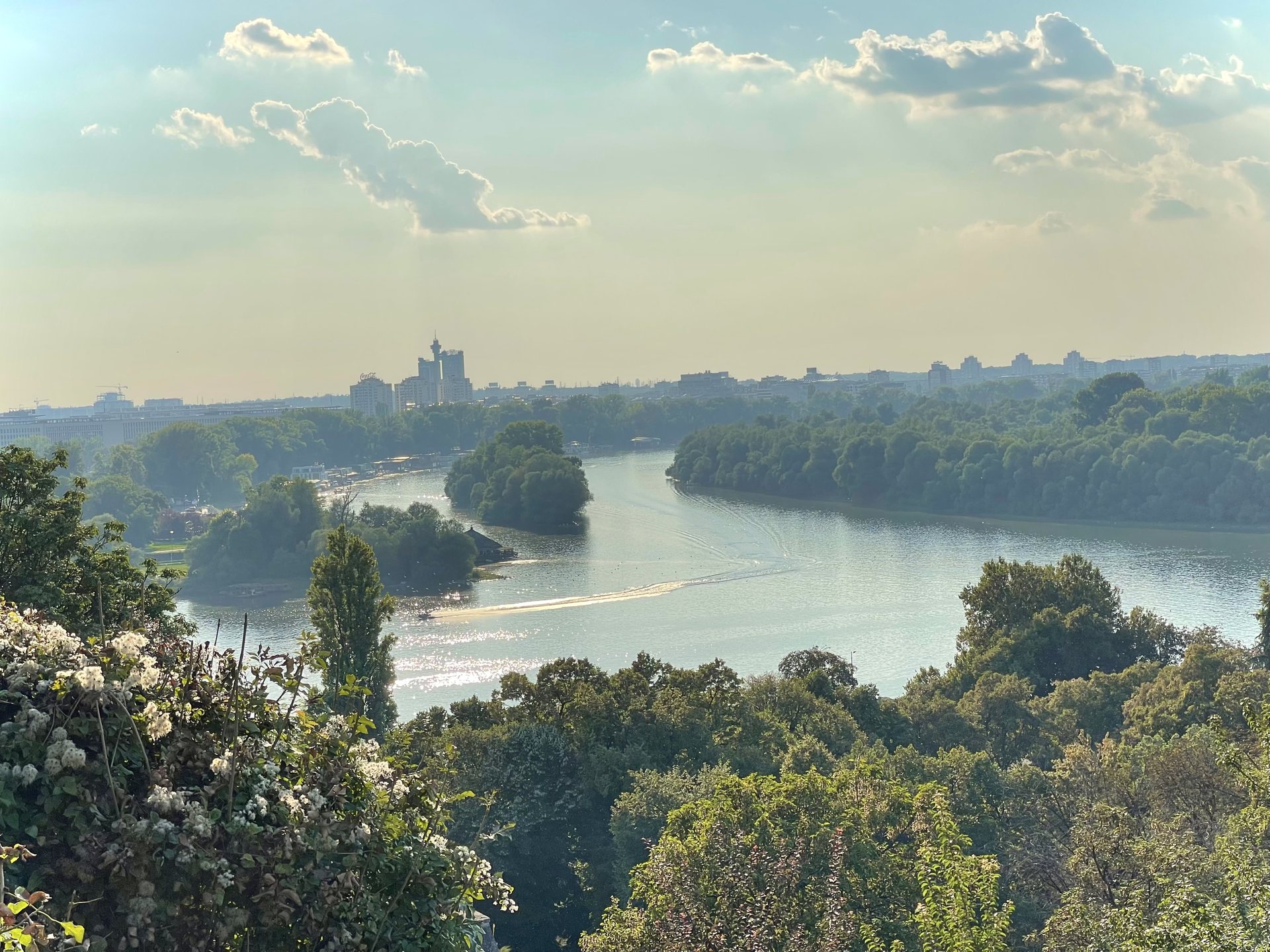
Photo Credit
Image courtesy of © ULTIMATE International MediaAbout Belgrade: history and heritage
Few cities have been taken, lost, burned and rebuilt as often as Belgrade. Its ridge above the meeting of the Sava and the Danube has guarded the road between Central Europe and the Balkans for more than two thousand years, and every power that wanted that road came here. What survives is a city that wears its layers lightly: a Roman well, an Ottoman tomb, a Habsburg gate and a Belle Époque boulevard, all within a short walk of the fortress.
At a glance
Names through history: Singidunum (Celtic and Roman), Beligrad or Beograd, “the White City” (Slavic, first recorded 878), Nándorfehérvár (Hungarian), Dar al-Jihad (Ottoman).
Peoples: Neolithic Vinča farmers, Celtic Scordisci, Romans, South Slavs from the sixth century, Ottoman Turks and Habsburg Austrians, and today’s Serbian capital.
Every power that wanted the road between Europe and the East came to this ridge, and every one of them left something behind.
Shaped by: Rome, Byzantium, medieval Serbia and Hungary, the Ottoman Empire (1521–1867, with breaks), the Habsburgs (1717–1739) and Yugoslavia (1918–2006, in its several forms).
Geography: the ridge above the confluence of the Sava and the Danube, where the Pannonian Plain meets the Balkan Peninsula.
Belgrade today
The City of Belgrade counted 1,681,405 people in the 2022 census, according to the Statistical Office of the Republic of Serbia: close to a quarter of the country’s population. Most are Serbs, and the city is also home to Montenegrins, Roma, Croats, Hungarians, Bosniaks, Gorani and Yugoslavs by self-declaration, along with newer arrivals from Russia, Ukraine, China and Türkiye.
Singidunum
People have lived here for at least seven thousand years. Vinča, on the Danube just east of the city, gave its name to one of the great Neolithic cultures of Europe, which flourished from the sixth to the fifth millennium BC, which is why Belgrade is often described as one of the oldest continuously inhabited places in Europe. In the third century BC a Celtic tribe, the Scordisci, built a fort on the ridge and called it Singidunum. The Romans took it in the first century AD, and it became a legionary camp on the Danube frontier, the limes, home to the Fourth Flavian Legion. Fragments of Roman walls, a well and stonework still turn up inside Belgrade Fortress, and the street plan of the old town around Knez Mihailova follows the Roman grid.
The White City
Slavic peoples settled the Balkans in the sixth and seventh centuries, and the town changed hands between Byzantium, the Bulgarian Empire and Hungary. The Slavic name, Beligrad or Beograd, “white city”, is first recorded in 878, in a letter of Pope John VIII; it probably described the pale stone walls on the ridge. In the early fifteenth century Despot Stefan Lazarević made Belgrade the capital of the Serbian Despotate and rebuilt the fortress, whose Despot’s Gate still stands.
Ottomans and Habsburgs
In 1456 the Hungarian commander John Hunyadi held Belgrade against an Ottoman siege; the noon bells rung across Catholic Europe are traditionally linked to that victory. In 1521 Sultan Suleiman the Magnificent took the city, and for most of the next three and a half centuries Belgrade was an Ottoman town of mosques, caravanserais and gardens. The Habsburgs captured it three times, most notably in 1717 under Prince Eugene of Savoy, and held it from 1717 to 1739, rebuilding the fortress in its present star-shaped form. Of the many mosques, only the Bajrakli Mosque in Dorćol, built around 1575, remains in use today.
No wonder the city’s story is so often told in numbers: an often-quoted count says Belgrade has been fought over in 115 wars and razed to the ground 44 times. Historians count in different ways, but the fortress shows the truth of it. Roman stonework, Byzantine and Serbian walls, the Ottoman Zindan Gate and the great Austrian bastions sit one on top of another, and from the Upper Town you look down on the meeting of the two rivers that made Belgrade worth fighting for.
A capital again
The Serbian uprisings of the early nineteenth century led to an autonomous principality, and Princess Ljubica’s Residence (1829–1831) shows the Balkan-Ottoman house of the new ruling families. In 1867 the last Ottoman garrison handed over the fortress, and from 1882 Belgrade was the capital of the Kingdom of Serbia. In 1918 it became the capital of the new Kingdom of Serbs, Croats and Slovenes, later Yugoslavia. The twentieth century brought two world wars and the conflicts of the 1990s; each time, Belgrade rebuilt.
Where East meets West
Until 1918 the Sava was a frontier. On one bank stood Zemun, a Habsburg border town of Baroque churches and Austrian merchants’ houses; on the other, Belgrade, with its Ottoman past and its Serbian Orthodox churches. You can still feel the difference when you cross the river. The cooking tells the same story: Ottoman ćevapi and burek, Viennese-style cakes and schnitzel, Hungarian paprika and Serbian kajmak on one table.
Architecture and institutions
Belgrade’s buildings read like a timeline. Knez Mihailova and the streets around Republic Square are lined with nineteenth-century and Belle Époque façades; the National Museum of Serbia, founded in 1844, faces the National Theatre, founded in 1869. The Serbian-Byzantine revival reached its peak in the Temple of Saint Sava on the Vračar plateau, one of the largest Orthodox churches in the world, whose golden mosaic dome now glows inside. Across the Sava, New Belgrade was laid out after the Second World War as the modernist showpiece of Yugoslavia, a city of wide boulevards, bold concrete housing blocks and landmarks such as the Genex Tower, and today the Belgrade Waterfront is adding towers and a long river promenade.
The city’s learning goes back to the Great School of 1808, the forerunner of the University of Belgrade. Nikola Tesla’s papers and ashes are kept at the Nikola Tesla Museum, and the city’s classical music life centres on Kolarac Hall, the National Theatre’s opera and ballet, and the Belgrade Philharmonic.
Our advice: start at Kalemegdan in the late afternoon, walk the fortress walls to the Victor monument as the sun sets over the confluence, then take Knez Mihailova down into the old town. You will have walked from Singidunum to the twenty-first century in an evening.
Sources
Population: Statistical Office of the Republic of Serbia, 2022 Census of Population, Households and Dwellings. History: Belgrade Fortress public enterprise; National Museum of Serbia; Encyclopaedia Britannica, “Belgrade”; Tourist Organisation of Belgrade.
Why it's on our list
- 1,681,405 people (2022 census)
- Singidunum, the Roman fort
- Beograd, the White City
- Ottomans and Habsburgs
- A capital again
- East meets West
- Arts and institutions
Opening hours, prices and seasonal openings change, so please check with Belgrade: history and heritage before you go.